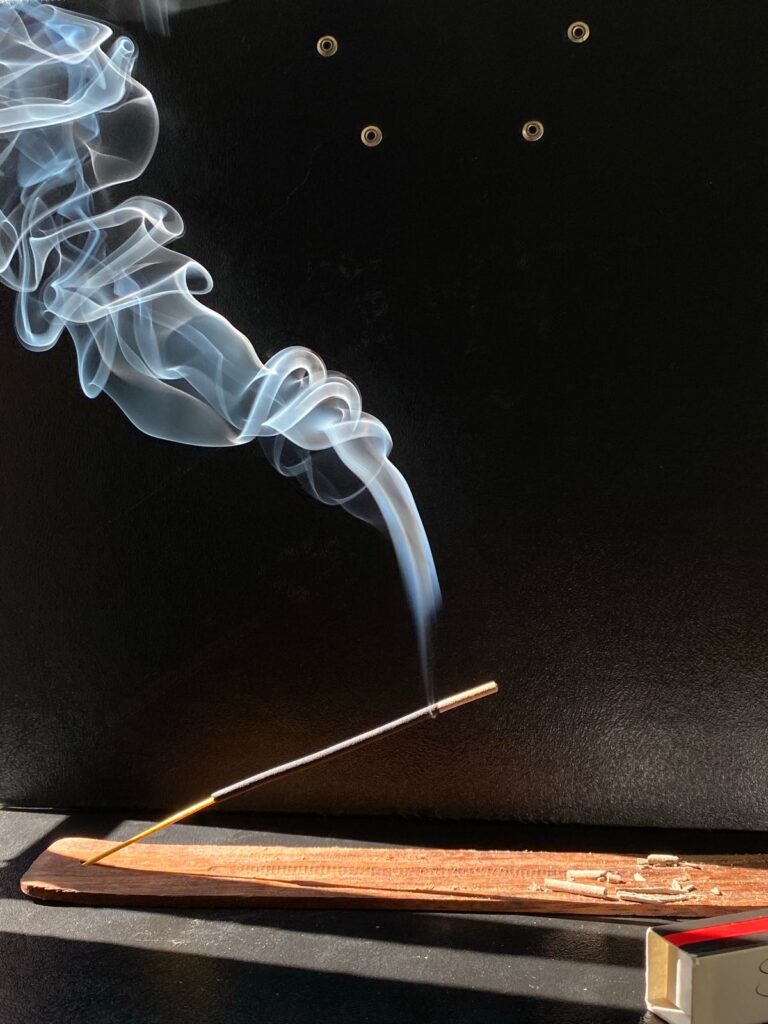
Incense has been used across an enormous range of cultures and eras — from ancient Egyptian temple offerings, to Chinese incense clocks used to measure time, to Japanese kōdō (“the way of incense”), to its role in Catholic and Orthodox Christian liturgy, to sage and resin burning in various Indigenous traditions of the Americas.
Common Types of Incense
- Stick and cone incense — combustible incense bound with a binder, common in Japanese and Indian traditions
- Resin incense — raw tree resins like frankincense and myrrh, burned on charcoal
- Bundled herbs — dried herb bundles, historically connected with a range of cultural and ceremonial practices
Modern, Everyday Use
Today, incense is often incorporated into meditation, yoga, or journaling routines simply as a sensory cue that signals “it’s time to slow down” — similar to how a specific song or scent can anchor a habit.
A Practical Note
Burning incense produces smoke and particulate matter, so ventilate the room and avoid it if you have respiratory sensitivities. Always use a fireproof holder and never leave burning incense unattended.
Recommended for This Practice
A simple resin or stick incense set with a proper heat-safe holder is the easiest way to start. Explore more in our Practices guide hub.
Continue Your Reading Path
If this guide was useful, these are natural next steps — each one builds on a theme touched on above.
- The History of Palo Santo
- An Introduction to Essential Oils in Spiritual Practice
- A Beginner’s Guide to Crystal Healing Stones
- Browse the full topic hub
You’ll also find a short list of related products above, chosen only after the educational content — never before it.